
ESG & Brand Power : Why Reputation is Now a Top - Line Business Metric
BUSINESS-SUSTAINABILITY
10/30/20251 min read
1. 𝗘𝗦𝗚 𝗥𝗲𝗽𝘂𝘁𝗮𝘁𝗶𝗼𝗻 𝗗𝗿𝗶𝘃𝗲𝘀 𝗧𝗿𝘂𝘀𝘁 𝗮𝗻𝗱 𝗖𝗼𝗻𝘀𝘂𝗺𝗲𝗿 𝗟𝗼𝘆𝗮𝗹𝘁𝘆
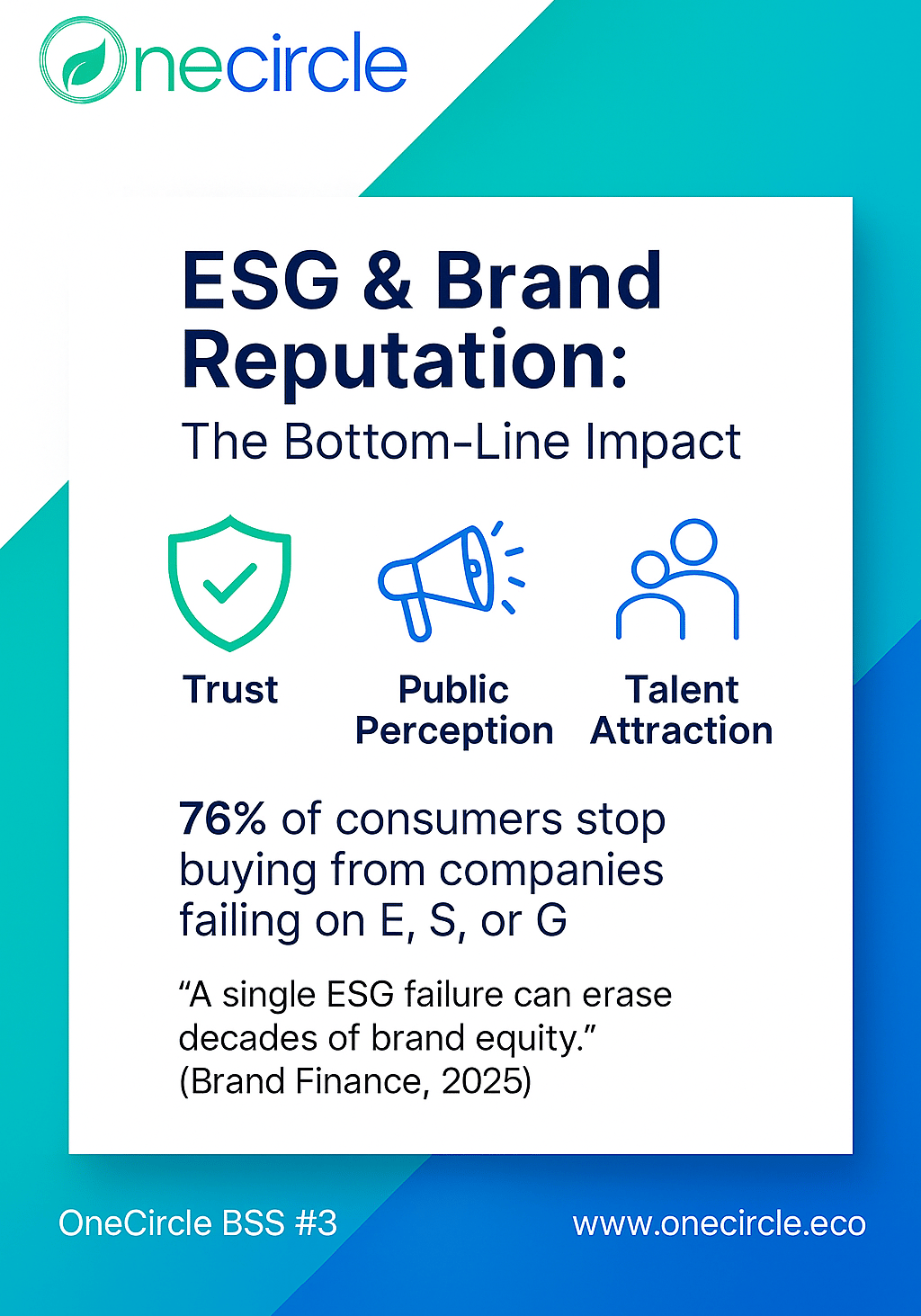
In the current landscape, brand value is inextricably linked to transparent ESG performance. According to the 2025 Edelman Trust Barometer, 67% of consumers trust companies committed to social issues. Meanwhile, a staggering 76% will boycott brands that ignore environmental, social, or governance responsibilities. Companies that make ESG a centerpiece—through climate pledges, fair labor, and strong governance - aren't just winning headlines, they're earning customer and stakeholder loyalty.
𝟮. 𝗘𝗦𝗚 𝗙𝗮𝗶𝗹𝘂𝗿𝗲𝘀 𝗔𝗿𝗲 𝗖𝗼𝘀𝘁𝗹𝘆 - 𝗔𝗻𝗱 𝗧𝗿𝗮𝗻𝘀𝗽𝗮𝗿𝗲𝗻𝘁
Market leaders have learned that poor social or governance practices can instantly erode years of brand-building. Tesla, for example, lost over $7.3 billion in brand value in 2025 after governance controversies and labor practices came under scrutiny - demonstrating how quickly ESG perceptions can shift, even for environmental innovators.
𝟯. 𝗘𝗦𝗚 𝗟𝗲𝗮𝗱𝗲𝗿𝘀𝗵𝗶𝗽 𝗔𝘁𝘁𝗿𝗮𝗰𝘁𝘀 𝗧𝗮𝗹𝗲𝗻𝘁, 𝗜𝗻𝘃𝗲𝘀𝘁𝗺𝗲𝗻𝘁, 𝗮𝗻𝗱 𝗣𝗮𝗿𝘁𝗻𝗲𝗿𝘀
ESG excellence isn't just a PR win: companies recognized for responsible leadership, like IKEA and Unilever, have surged ahead both in attracting capital and retaining top talent. IKEA’s 2025 sustainability drive, for example, wasn’t just marketing - the company doubled sustainable product sales during its “Earth Weeks” campaign and is now targeting a 50% emissions reduction across its value chain by 2030. Suppliers are asking to do more, and investors are allocating capital to organizations with demonstrated ESG leadership.
𝟰. 𝗕𝗿𝗮𝗻𝗱 𝗩𝗮𝗹𝘂𝗲 𝗮𝗻𝗱 𝗘𝗦𝗚 𝗮𝗿𝗲 𝗠𝗮𝗿𝗸𝗲𝘁 𝗗𝗶𝗳𝗳𝗲𝗿𝗲𝗻𝘁𝗶𝗮𝘁𝗼𝗿𝘀
Leaders in ESG now command premium prices, secure bigger B2B contracts, and are more resilient in crisis. According to Vena Solutions, 59% of executives cite “improving brand reputation” as their primary reason for ESG investment - outweighing both compliance and even long-term ROI.
📉 𝗖𝗮𝘂𝘁𝗶𝗼𝗻𝗮𝗿𝘆 𝘁𝗮𝗹𝗲: As Tesla learned this year, even iconic innovation is no shield against reputational risk - a $7.3B brand value loss puts the spotlight on integrity and governance as the other two legs of the ESG stool.
💡 𝗪𝗶𝗻𝗻𝗶𝗻𝗴 𝘀𝘁𝗿𝗮𝘁𝗲𝗴𝗶𝗲𝘀: IKEA, meanwhile, is turning values into action and loyalty—ratcheting up sustainable sourcing, circularity, and transparent reporting. The results? Double-digit gains in sustainable product sales, a surge in customer advocacy, and supplier demand for higher standards.
How is your organization making ESG visible to customers, talent, and partners? What does your latest brand win - or stumble - teach about reputation in the ESG era? Let’s exchange hard-learned lessons and next steps.


Connect. Act. Regenerate.
© 2025, OneCircle Solutions