
Stakeholder Engagement & materiality : The Heartbeat of Imapactful ESG
BUSINESS-SUSTAINABILITY
10/31/20251 min read
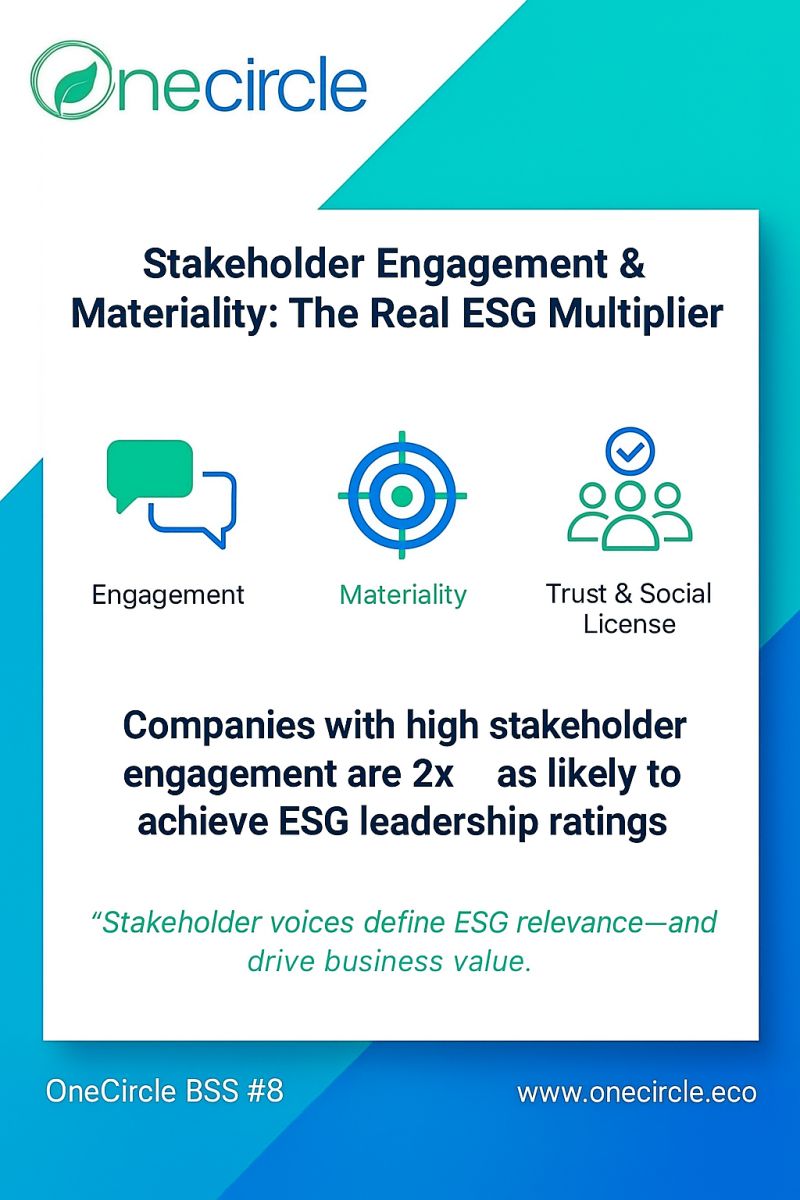
𝗦𝘁𝗮𝗸𝗲𝗵𝗼𝗹𝗱𝗲𝗿 𝗘𝗻𝗴𝗮𝗴𝗲𝗺𝗲𝗻𝘁 & 𝗠𝗮𝘁𝗲𝗿𝗶𝗮𝗹𝗶𝘁𝘆: 𝗧𝗵𝗲 𝗛𝗲𝗮𝗿𝘁𝗯𝗲𝗮𝘁 𝗼𝗳 𝗜𝗺𝗽𝗮𝗰𝘁𝗳𝘂𝗹 𝗘𝗦𝗚
Ever wonder why some sustainability programs truly move the needle while others fade as box-ticking exercises? The answer lies in two essentials-genuine stakeholder engagement and a clear materiality focus.
🔹 𝗦𝘁𝗮𝗸𝗲𝗵𝗼𝗹𝗱𝗲𝗿 𝗘𝗻𝗴𝗮𝗴𝗲𝗺𝗲𝗻𝘁: 𝗕𝘂𝗶𝗹𝗱𝗶𝗻𝗴 𝗧𝗿𝘂𝘀𝘁, 𝗗𝗿𝗶𝘃𝗶𝗻𝗴 𝗜𝗻𝗻𝗼𝘃𝗮𝘁𝗶𝗼𝗻
● Focus: Employees, investors, supply chains, communities, NGOs, regulators
🔸 High-performing companies treat stakeholder input as a co-creation process, not a formality. Advisory panels, roundtables, and digital feedback channels create a 𝘤𝘶𝘭𝘵𝘶𝘳𝘦 𝘰𝘧 𝘤𝘰𝘯𝘵𝘪𝘯𝘶𝘰𝘶𝘴 𝘭𝘪𝘴𝘵𝘦𝘯𝘪𝘯𝘨. This collaboration surfaces fresh ESG opportunities, highlights hidden risks, and forges collective buy-in for sustainability goals. Companies prioritizing engagement report stronger ESG ratings, faster adaptation to market shifts, and enhanced reputation among customers and investors.
🔹 𝗠𝗮𝘁𝗲𝗿𝗶𝗮𝗹𝗶𝘁𝘆: 𝗪𝗵𝗮𝘁 𝗠𝗮𝘁𝘁𝗲𝗿𝘀 𝗠𝗼𝘀𝘁, 𝗠𝗮𝗽𝗽𝗲𝗱 𝗪𝗶𝘁𝗵 𝗣𝗿𝗲𝗰𝗶𝘀𝗶𝗼𝗻
● Focus: Targeting the most financially and societally relevant ESG issues
🔸 Materiality assessments (e.g., using 𝗚𝗥𝗜 𝗼𝗿 𝗔𝗔𝟭𝟬𝟬𝟬 𝘀𝘁𝗮𝗻𝗱𝗮𝗿𝗱𝘀) help organizations identify and prioritize the ESG topics that are critical from both a financial and stakeholder-impact lens, known as "𝘥𝘰𝘶𝘣𝘭𝘦 𝘮𝘢𝘵𝘦𝘳𝘪𝘢𝘭𝘪𝘵𝘺." This ensures resources go toward what drives real value - not just what’s trendy or mandatory. A materiality matrix plots what matters most for business and society, aligning the strategy with genuine (not assumed) priorities.
🔹 𝗧𝗿𝗮𝗻𝘀𝗽𝗮𝗿𝗲𝗻𝗰𝘆 𝗮𝗻𝗱 𝗔𝗰𝗰𝗼𝘂𝗻𝘁𝗮𝗯𝗶𝗹𝗶𝘁𝘆
● Focus: Real-time reporting, ongoing dialogue, regular materiality reviews
🔸 Global leaders maintain open communication - publishing regular, honest updates (including both wins and set-backs), showcasing case studies, and adapting initiatives based on real stakeholder feedback. Transparent reporting via channels like 𝘎𝘙𝘐 𝘰𝘳 𝘚𝘈𝘚𝘉 𝘧𝘳𝘢𝘮𝘦𝘸𝘰𝘳𝘬𝘴 sends a clear message: sustainability is not just about targets but about real, people-centered impact.
𝗪𝗵𝘆 𝗜𝘁 𝗠𝗮𝘁𝘁𝗲𝗿𝘀:
Organizations with engaged stakeholders and a materiality-led ESG strategy are twice as likely to achieve top ESG scores and outpace peers on risk management, innovation, and market trust. In 2025, this transparency is the new credibility.
What real action is your company taking to listen and act on stakeholder voices? And how has materiality focus changed your approach to ESG priorities?
𝗦𝗵𝗮𝗿𝗲 𝗯𝗲𝗹𝗼𝘄: What’s one lesson-or breakthrough-you’ve had while authentically engaging your stakeholders or updating your materiality assessment?
#onecircleeco#onecircle#esg#sustainability#bss


Connect. Act. Regenerate.
© 2025, OneCircle Solutions