
Your emissions went UP last year. But what if you actually got GREENER?
BUSINESS-SUSTAINABILITY
1/1/20261 min read
𝗬𝗼𝘂𝗿 𝗲𝗺𝗶𝘀𝘀𝗶𝗼𝗻𝘀 𝘄𝗲𝗻𝘁 𝗨𝗣 𝗹𝗮𝘀𝘁 𝘆𝗲𝗮𝗿. 𝗕𝘂𝘁 𝘄𝗵𝗮𝘁 𝗶𝗳 𝘆𝗼𝘂 𝗮𝗰𝘁𝘂𝗮𝗹𝗹𝘆 𝗴𝗼𝘁 𝗚𝗥𝗘𝗘𝗡𝗘𝗥?
This is the problem with obsessing over absolute emissions.
A factory's CO2 footprint rises 23% year-over-year. The board panics. The CEO gets grilled by investors.
Then you look at the denominator: revenue doubled. Per unit of output, emissions fell 26.5%.
This is 𝗰𝗮𝗿𝗯𝗼𝗻 𝗶𝗻𝘁𝗲𝗻𝘀𝗶𝘁𝘆. And it's the metric that separates greenwashing from real progress.
𝗧𝗵𝗲 𝗠𝗮𝘁𝗵 𝗕𝗲𝗵𝗶𝗻𝗱 𝗘𝘃𝗲𝗿𝘆 𝗖𝗹𝗶𝗺𝗮𝘁𝗲 𝗖𝗹𝗮𝗶𝗺:
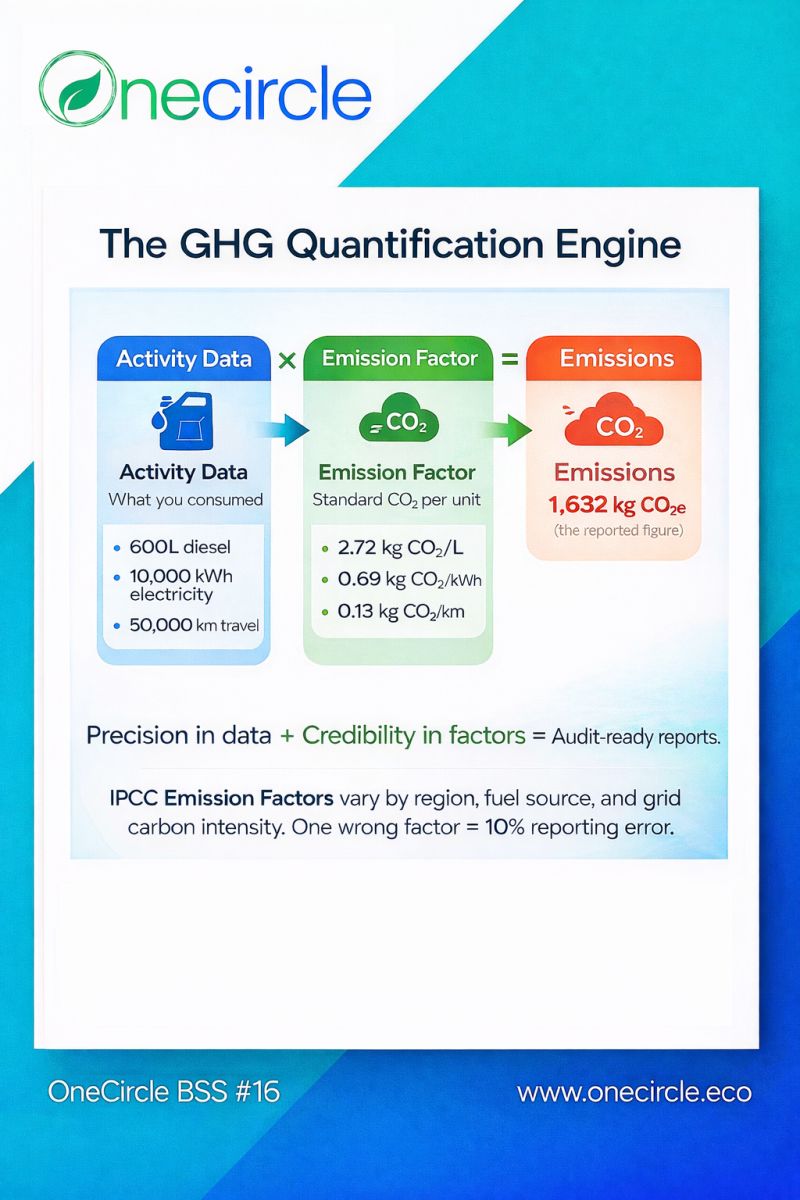
Every emissions number you see rests on one simple formula:
Activity Data × Emission Factor = Emissions
(What you consumed) × (Standard CO2 per unit) = CO2 equivalent
𝗘𝘅𝗮𝗺𝗽𝗹𝗲:
- 600 liters of diesel consumed
- Emission factor: 2.72 kg CO2/liter
- = 1,632 kg CO2e
This formula is the backbone of all corporate climate reporting. But here's the hidden risk: 𝗴𝗮𝗿𝗯𝗮𝗴𝗲 𝗶𝗻, 𝗴𝗮𝗿𝗯𝗮𝗴𝗲 𝗼𝘂𝘁.
𝗧𝗵𝗲 𝗧𝗵𝗿𝗲𝗲 𝗜𝗻𝘃𝗶𝘀𝗶𝗯𝗹𝗲 𝗔𝘀𝘀𝘂𝗺𝗽𝘁𝗶𝗼𝗻𝘀:
1️⃣ 𝗘𝗺𝗶𝘀𝘀𝗶𝗼𝗻 𝗙𝗮𝗰𝘁𝗼𝗿𝘀 – Standardized values from IPCC, governments, or industry bodies. India's grid power: ~0.69 kg CO2/kWh. Natural gas: ~0.39. Choose the wrong factor, and your entire report is wrong.
2️⃣ 𝗔𝗰𝘁𝗶𝘃𝗶𝘁𝘆 𝗗𝗮𝘁𝗮 𝗤𝘂𝗮𝗹𝗶𝘁𝘆 – Did you really consume 600L of diesel? Or did you estimate? Auditors catch this.
3️⃣ 𝗢𝗿𝗴𝗮𝗻𝗶𝘇𝗮𝘁𝗶𝗼𝗻𝗮𝗹 𝗕𝗼𝘂𝗻𝗱𝗮𝗿𝗶𝗲𝘀 – CRITICAL. Choose "Operational Control" (report 100% of what you run) vs. "Financial Control" (report 100% of what you own) vs. "Equity Share" (report proportional stake).
Same company. Three approaches. Same data. THREE DIFFERENT REPORTED EMISSIONS (55k vs 5k vs 47.5k tons).
This variance is why CSRD 2025 (EU) and upcoming SEC rules (US) now MANDATE boundary clarity.
𝗧𝗵𝗲 𝗢𝗻𝗲𝗖𝗶𝗿𝗰𝗹𝗲 𝗣𝗿𝗶𝗻𝗰𝗶𝗽𝗹𝗲:
Track absolute emissions for accountability. Track intensity for progress.
- Rising absolute emissions? Expected during growth. Track intensity.
- Falling intensity? You're becoming more efficient. That's real climate leadership.
𝗧𝘄𝗼 𝗖𝗿𝗶𝘁𝗶𝗰𝗮𝗹 𝗤𝘂𝗲𝘀𝘁𝗶𝗼𝗻𝘀 𝗳𝗼𝗿 𝗬𝗼𝘂𝗿 𝗧𝗲𝗮𝗺:
1. Are you reporting carbon intensity alongside absolute emissions?
2. Have you defined your organizational boundary (Operational Control? Financial? Equity?), and can you defend it under audit?
#CarbonAccounting#GHGProtocol#CarbonIntensity#Sustainability#ESG#ClimateData#CorpResponsibility#OneCircle#OneCircleEco


Connect. Act. Regenerate.
© 2025, OneCircle Solutions